
Sunday, December 28, 2008


Sunday, December 21, 2008
English Rain
Poem: In Your Mind
Author: Carol Ann Duffy
~

~
The other country, is it anticipated or half-remembered?
Its language is muffled by the rain which falls all afternoon
one autumn in England, and in your mind
you put aside your work and head for the airport
with a credit card and a warm coat you will leave
~
on the plane. The past fades like newsprint in the sun.
You know people there. Their faces are photographs
on the wrong side of your eyes. A beautiful boy
in the bar on the harbour serves you a drink – what? –
asks you if men could possibly land on the moon.
~
A moon like an orange drawn by a child. No.
Never. You watch it peel itself into the sea.
Sleep. The rasp of carpentry wakes you. On the wall,
a painting lost for thirty years renders the room yours.
Of course. You go to your job, right at the old hotel, left,
~
then left again. You love this job. Apt sounds
mark the passing of the hours. Seagulls. Bells. A flute
practising scales. You swap a coin for a fish on the way home.
Then suddenly you are lost but not lost, dawdling
on the blue bridge, watching six swans vanish
~
under your feet. The certainty of place turns on the lights
all over town, turns up the scent on the air. For a moment
you are there, in the other country, knowing its name.
And then a desk. A newspaper. A window. English rain.
Saturday, November 22, 2008
Memories
This is a featured poem by lili3.
Thank you for your wonderful contribution!
Or if it was the memory of imagining the life and world of the people in the cars passing by in traffic, and how much affection and care did they have or gave to the passenger
Thank you for your wonderful contribution!
Memories
By: Lili3
Did you have memory that stayed through your head a long while?
If it was a memory of the first time you realized that you’ve gotten taller by an inch in the morning
Or if it was the memory of imagining the life and world of the people in the cars passing by in traffic, and how much affection and care did they have or gave to the passenger
Was there a memory of a loved one cry in your presence that affected you deeply that you might even remember it on the hospital bed with the doctor beating his fist on you’re the left side of your chest
Sometimes, people save these memories in their mind, even if it wasn’t special, but was a small connections or an encounter with a stranger
Would it be the memory of the early mornings in the school bus waving back to the kids in the other car?
Or when exchanging a smile with a waitress in a diner?
Normal people would say that’s just foolish to remember any single detail of a passing stranger, but who are they to define normal if they do the same thing as every human does
Some memories unwarily leaves, with no alert or a sign of it, just walk out of the door leaving chunks or bits
People wonder how they could possibly forget the date of their first greetings with their first love in their lifetime
People also wonder how they would forget the pictures of their old friends in an old floppy disk
They also wonder how couldn’t they realize that their children has matured a lot that they already got a job at an office and sometimes came back home drunk or drugged
If it was possible, if you can collect all the memories from everyone around the world
Think … how a heart would understand countless experiences of hardship or happiness that large and big crates couldn’t hold
Think … of the people that created those memories, how they felt, how they lived it, and how it possessed them for a few seconds of a minute while laying down on their bed before falling in a deep sleep
Keep a memo to yourself how wonderful a memory means, how emotions it carries and how it just attracts a simple attention from you
....
Wednesday, October 29, 2008
Couch Potato Conglomerate
This is the essay that was published in Challenge the Experts. It's a variation from my usual form of formal writing, and I only had two hours to work on it. The topic is: Many experts believe that voter turnout continues to decline because people have lost faith in their political leaders. Do you agree or disagree? and Why?
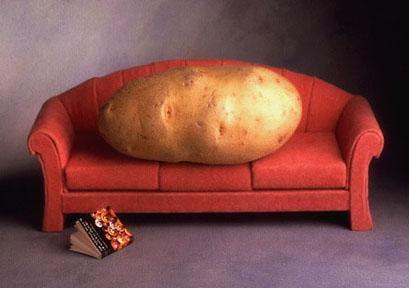 Couch Potato Conglomerate
By: Annie Li
Theodore Roosevelt once coined the phrase “A vote is like a rifle; its usefulness depends upon the character of the user.” Neither the target nor the rifle has changed, so the fault is ultimately bequeathed to the user. The 1960s marked the gradual decline of voter turnout, and statistics reveal that the waning is predominantly determined by young voters. In a decade that saw mankind extend its fingers to touch the moon, it is necessary to recognize the debut of the tributaries of technology. Media propelled the debutantes of society onto a world stage and assumed the directorial position to advertise the indulgent behaviour that keeps voters grounded at home. This time, it is not a struggle against the red flags of foreign powers or their axes of evil to preserve democracy.
Instead, it is a fight against the couch potato conglomerates. Modern political leaders continue to trudge solidly along the steps hollowed out by the dedicated individuals who first intoned democracy. It is the masses that constantly writhe in fevered inconsistency, easily influenced by remote obligations and heedless of the ramifications of their conduct. The youths of today are confined within the materialistic ventures of Ipods and MP4s, spending 25 hours of their 24 hour day tapping away at computers. The immature citizenry tolerate extravagant lifestyles that far surpass society’s romantic view of civic duty. Every action is first evaluated against the effort and energy consumed as opposed to the consequences. In this case, though the leaders have not lost their appeal, it is simply too much of a hassle to vote.
Indifference and apathy are also major contributors to a declining voter turnout. Throughout the history of democracy, the value of one vote is often regarded as insignificant when placed adjacent to the whole. Though this fact will never change, when it is coupled with the belief of a ballooning population, it is much too discouraging. It is not the loss of faith that stimulates a conscientious voter to maintain sufficient distance from a ballot. There is no lack of remarkable political leaders, nor is there a lack of political passion. In this day and age, the enormous time commitment essential to understanding the party platforms and the candidates themselves is too expensive for many to consider while maintaining a fast-paced lifestyle.
The overexposure of the electoral campaigns to the public years before the actual election is another disincentive. On the other hand, while smear campaigns and attack advertisements aimed to reduce candidate credibility does trigger a loss of faith in the government, it in turn encourages the public to take action. To uphold the standards of democracy, it is necessary to utilize a more dramatic approach to resolve the conflict. Perhaps Australia’s compulsory voting system should be adopted - a breath of fresh air to poke fun at the idle clouds.
---
Some parts are quite awkward when I read it now - but I suppose it's because I never had the chance to let it sit and then go back to it. I wrote it in one setting without doing a proper rough copy and hardcopy edits. The last sentence is a specific example. I was actually trying to link the image of clouds with the image of potatoes (which then links to couch potatoes) in the readers' minds, but I don't think it was as effective as it could have been.
However, I do believe the essay discusses several issues regarding the decline in voter turnout, none of which is caused by the lack of faith in political leaders. If you didn't believe in the person who was representing you, wouldn't you do something to change that state of disatisfaction? You'd want to be more involved, as opposed to staying away. In addition, I don't believe that our current political leaders are necessarily less capable of fulfilling their duties than previous leaders. In the end, everything really depends on public image.
Couch Potato ConglomerateBy: Annie Li
Theodore Roosevelt once coined the phrase “A vote is like a rifle; its usefulness depends upon the character of the user.” Neither the target nor the rifle has changed, so the fault is ultimately bequeathed to the user. The 1960s marked the gradual decline of voter turnout, and statistics reveal that the waning is predominantly determined by young voters. In a decade that saw mankind extend its fingers to touch the moon, it is necessary to recognize the debut of the tributaries of technology. Media propelled the debutantes of society onto a world stage and assumed the directorial position to advertise the indulgent behaviour that keeps voters grounded at home. This time, it is not a struggle against the red flags of foreign powers or their axes of evil to preserve democracy.
Instead, it is a fight against the couch potato conglomerates. Modern political leaders continue to trudge solidly along the steps hollowed out by the dedicated individuals who first intoned democracy. It is the masses that constantly writhe in fevered inconsistency, easily influenced by remote obligations and heedless of the ramifications of their conduct. The youths of today are confined within the materialistic ventures of Ipods and MP4s, spending 25 hours of their 24 hour day tapping away at computers. The immature citizenry tolerate extravagant lifestyles that far surpass society’s romantic view of civic duty. Every action is first evaluated against the effort and energy consumed as opposed to the consequences. In this case, though the leaders have not lost their appeal, it is simply too much of a hassle to vote.
Indifference and apathy are also major contributors to a declining voter turnout. Throughout the history of democracy, the value of one vote is often regarded as insignificant when placed adjacent to the whole. Though this fact will never change, when it is coupled with the belief of a ballooning population, it is much too discouraging. It is not the loss of faith that stimulates a conscientious voter to maintain sufficient distance from a ballot. There is no lack of remarkable political leaders, nor is there a lack of political passion. In this day and age, the enormous time commitment essential to understanding the party platforms and the candidates themselves is too expensive for many to consider while maintaining a fast-paced lifestyle.
The overexposure of the electoral campaigns to the public years before the actual election is another disincentive. On the other hand, while smear campaigns and attack advertisements aimed to reduce candidate credibility does trigger a loss of faith in the government, it in turn encourages the public to take action. To uphold the standards of democracy, it is necessary to utilize a more dramatic approach to resolve the conflict. Perhaps Australia’s compulsory voting system should be adopted - a breath of fresh air to poke fun at the idle clouds.
---
Some parts are quite awkward when I read it now - but I suppose it's because I never had the chance to let it sit and then go back to it. I wrote it in one setting without doing a proper rough copy and hardcopy edits. The last sentence is a specific example. I was actually trying to link the image of clouds with the image of potatoes (which then links to couch potatoes) in the readers' minds, but I don't think it was as effective as it could have been.
However, I do believe the essay discusses several issues regarding the decline in voter turnout, none of which is caused by the lack of faith in political leaders. If you didn't believe in the person who was representing you, wouldn't you do something to change that state of disatisfaction? You'd want to be more involved, as opposed to staying away. In addition, I don't believe that our current political leaders are necessarily less capable of fulfilling their duties than previous leaders. In the end, everything really depends on public image.
Thursday, October 16, 2008
1000 Marbles
Though I hate chain letters, I couldn't help but feel touched by this one.
"1000 Marbles"
By: Anonymous
The older I get, the more I enjoy Saturday mornings. Perhaps it's the quiet solitude that comes with being the first to rise, or maybe it's the unbounded joy of not having to be at work. Either way, the first few hours of a Saturday morning are most enjoyable. A few weeks ago, I was shuffling toward the basement shack with a steaming cup of coffee in one hand and the morning paper in the other. What began as a typical Saturday morning, turned into one of those lessons that life seems to hand you from time to time. Let me tell you about it.
I turned the dial up into the phone portion of the band on my ham radio in order to listen to a Saturday morning swap net. Along the way, I came across an older sounding chap, with a tremendous signal and a golden voice. You know the kind, he sounded like he should be in the broadcasting business.
He was telling whomever he was talking with something about "a thousand marbles."
I was intrigued and stopped to listen.
"Well, Tom, it sure sounds like you're busy with your job. I'm sure they pay you well, but it's a shame you have to be away from home and your family so much. Hard to believe a young fellow should have to work sixty or seventy hours a week to make ends meet. Too bad you missed your daughter's dance recital."
He continued, "Let me tell you something Tom, something that has helped me keep a good perspective on my own priorities."
And that's when he began to explain his theory of a thousand marbles.
"You see, I sat down one day and did a little arithmetic. The average person lives about seventy-five years. I know, some live more and some live less, but on average, folks live about seventy-five years." Now then, I multiplied 75 times 52 and I came up with 3900 which is the number of Saturdays that the average person has in their entire lifetime.
Now stick with me Tom, I'm getting to the important part.
It took me until I was fifty-five years old to think about all this in any detail, and by that time I had lived through over twenty-eight hundred Saturdays. I got to thinking that if I lived to be seventy-five, I only had about a thousand of them left to enjoy.
So I went to a toy store and bought every single marble they had. I ended up having to visit three toy stores to roundup 1000 marbles. I took them home and put them inside of a large, clear plastic container right here in the shack next to my gear.
Every Saturday since then, I have taken one marble out and thrown it away. I found that by watching the marbles diminish, I focused more on the really important things in life. There is nothing like watching your time here on this earth run out to help get your priorities straight. Now let me tell you one last thing before I sign-off with you and take my lovely wife out for breakfast. This morning, I took the very last marble out of the container. I figure if I make it until next Saturday then I have been given a little extra time. And the one thing we can all use is a little more time.
It was nice to meet you Tom, I hope you spend more time with your family, and I hope to meet you again here on the band. 75 year Old Man, this is K9NZQ, clear and going OUT, good morning!"
You could have heard a pin drop on the band when this fellow signed off. I guess he gave us all a lot to think about. I had planned to work on the antenna that morning, and then I was going to meet up with a few hams to work on the next club newsletter. Instead, I went upstairs and woke my wife up with a kiss. "C'mon honey, I'm taking you and the kids to breakfast."
"What brought this on?" she asked with a smile.
"Oh, nothing special, it's just been a long time since we spent a Saturday together with the kids. Hey, can we stop at a toy store while we're out? I need to buy some marbles."
MAY ALL SATURDAYS BE SPECIAL!
"1000 Marbles"
By: Anonymous
The older I get, the more I enjoy Saturday mornings. Perhaps it's the quiet solitude that comes with being the first to rise, or maybe it's the unbounded joy of not having to be at work. Either way, the first few hours of a Saturday morning are most enjoyable. A few weeks ago, I was shuffling toward the basement shack with a steaming cup of coffee in one hand and the morning paper in the other. What began as a typical Saturday morning, turned into one of those lessons that life seems to hand you from time to time. Let me tell you about it.
I turned the dial up into the phone portion of the band on my ham radio in order to listen to a Saturday morning swap net. Along the way, I came across an older sounding chap, with a tremendous signal and a golden voice. You know the kind, he sounded like he should be in the broadcasting business.
He was telling whomever he was talking with something about "a thousand marbles."
I was intrigued and stopped to listen.
"Well, Tom, it sure sounds like you're busy with your job. I'm sure they pay you well, but it's a shame you have to be away from home and your family so much. Hard to believe a young fellow should have to work sixty or seventy hours a week to make ends meet. Too bad you missed your daughter's dance recital."
He continued, "Let me tell you something Tom, something that has helped me keep a good perspective on my own priorities."
And that's when he began to explain his theory of a thousand marbles.
"You see, I sat down one day and did a little arithmetic. The average person lives about seventy-five years. I know, some live more and some live less, but on average, folks live about seventy-five years." Now then, I multiplied 75 times 52 and I came up with 3900 which is the number of Saturdays that the average person has in their entire lifetime.
Now stick with me Tom, I'm getting to the important part.
It took me until I was fifty-five years old to think about all this in any detail, and by that time I had lived through over twenty-eight hundred Saturdays. I got to thinking that if I lived to be seventy-five, I only had about a thousand of them left to enjoy.
So I went to a toy store and bought every single marble they had. I ended up having to visit three toy stores to roundup 1000 marbles. I took them home and put them inside of a large, clear plastic container right here in the shack next to my gear.
Every Saturday since then, I have taken one marble out and thrown it away. I found that by watching the marbles diminish, I focused more on the really important things in life. There is nothing like watching your time here on this earth run out to help get your priorities straight. Now let me tell you one last thing before I sign-off with you and take my lovely wife out for breakfast. This morning, I took the very last marble out of the container. I figure if I make it until next Saturday then I have been given a little extra time. And the one thing we can all use is a little more time.
It was nice to meet you Tom, I hope you spend more time with your family, and I hope to meet you again here on the band. 75 year Old Man, this is K9NZQ, clear and going OUT, good morning!"
You could have heard a pin drop on the band when this fellow signed off. I guess he gave us all a lot to think about. I had planned to work on the antenna that morning, and then I was going to meet up with a few hams to work on the next club newsletter. Instead, I went upstairs and woke my wife up with a kiss. "C'mon honey, I'm taking you and the kids to breakfast."
"What brought this on?" she asked with a smile.
"Oh, nothing special, it's just been a long time since we spent a Saturday together with the kids. Hey, can we stop at a toy store while we're out? I need to buy some marbles."
MAY ALL SATURDAYS BE SPECIAL!
Thursday, September 18, 2008
A Little Philosophy
I stayed up all night yesterday (for the first real time ever), and I feel absolutely horrible. But as feeling hung-over as it goes without alcohol, I felt a little burst of inspiration this morning. Some sort of chemical combustion happened, and next thing I knew, I was spouting a whole bunch of random stuff about the meaning of life and happiness and who-knows-what. I wrote it out on paper (wow, that's a rarity), and decided to discuss it at this site. So here's my little philosophical outburst.

As humans, it is impossible for us to be in a constant state of happiness or satisfaction. Every once in a while, life happens, and it is our response and reaction to these circumstantial events that make us grow. It is during these trials of life that we are given the biggest opportunity to prove ourselves, and to fulfill our capacity as individuals.
I doubt that there is any person in this world whose life isn’t defined by the ups and downs of action and consequence. To achieve anything, may it be the acceptance to a good university or the promotion to a higher position; we must first establish that we want it - that it is a goal in our life. But what is “want” when what we “want” is almost disconcerting in its frequent appearance in our minds? It is here that we make an either conscious or subconscious decision that not only do we “want” it, we “need” it.
The higher the object is on our list, the better the chance of us obtaining it. Why can we change our chances simply by associating a different word with the object of our desire? Because whether we know it or not, it signifies our willingness (however reluctant we provide that willingness) to sacrifice for the achievement of our goal.
Now I find myself repeating a concept that has been reiterated boundlessly, but it never detracts from the truth of the statement - that though thinking and speaking is significant, it is our actions that matter. Following through with what we decide is just as important, if not more, than making that decision in the first place. Putting words down without a plan for action is a representation of irresponsibility and in my opinion, even a display of the lack of morals.
It is here where we can find a definite distinction between those who succeed and those who fail. When your work is deemed more substantial in comparison to a competitor’s, it is a testament of your will and human capacity. Standing out – that is success. Yet at the same time, failure does not mean the eradication of the opportunity to obtain what it is that we “need”. It simply means that due to some circumstance, we’ve now been pushed out onto the long road from the short. It is too much to expect an individual to be perfect, as much as we strive toward it, and sometimes the long road ends up teaching us more than what we could have gained otherwise.
Sometimes we fall. It is not an uncommon sight. There are many reasons – from our inability to fulfill expectations to unforeseen circumstances. This is when we hit our lowest, when the word “happiness” ceases to exist in our dictionary. But what can we do except move on? As much as we’d like to change the past, the sun will continue to rise every morning, and the world will continue to rush past, with or without us.
I also believe, however, that without the lows, we wouldn’t be able to truly experience the highs. That without the contrast of life slapping us in the face and then shaking our hands, how would we be able to determine that we’ve achieved happiness?
Isn’t this what life is about, the pursuit of happiness? Every action in our lives is a contributing factor to our progression towards an intrinsic sense of deep satisfaction. As much as we’ve accomplished in our lives – with the establishment of goals and the fulfillment of our dreams, we yearn for that few moments of ecstasy.
Happiness is when after studying four years in high school at the expense of a social life, the student receives an acceptance letter from Harvard. But as high as that letter pushes him or her up, humans, like everything else, eventually fall down. Once we’re on the bottom, we restart our climb up, gradually accumulating more knowledge and experience. We make another goal, we place it on our “need” list, and we set ourselves up for another taste of that sweet ambrosia.
In contrast to the focus on “achievement equals happiness”, we must also realize that no matter where life takes us, the levels of happiness are the same. A rich millionaire isn’t necessarily happier than a poor individual whose goal in life is to see his kids grow up healthy and strong. There is a common misconception that the higher you are on the food chain, the happier you are. Happiness is determined by the set of individual values that only pertain to the individual.
I must ask you this: have you ever laughed while watching a dog chase its tail? You have. In a way, you’ve been laughing at your self. At the end, when we look at life as a whole, it is a never-ending cycle that doesn’t have a definite beginning or an end with the inclusion of a purpose and a checklist for the fulfillment of that purpose.
Can we ever truly experience the question of why we’re here on earth; with the feeling that we’re searching for something? No. But perhaps our closest guess is that we've got to take life as it is, and enjoy it while it lasts. Therefore, humans must take up every opportunity; every chance that makes an appearance as a fork in our road.
In the expansion of our capacity as individuals, in the impact we deliver to our surroundings, in our pursuit of perfection, maybe, just maybe, we can find happiness.
- Annie
~~~~~~~~
The Pursuit of Happiness
Annie
As humans, it is impossible for us to be in a constant state of happiness or satisfaction. Every once in a while, life happens, and it is our response and reaction to these circumstantial events that make us grow. It is during these trials of life that we are given the biggest opportunity to prove ourselves, and to fulfill our capacity as individuals.
I doubt that there is any person in this world whose life isn’t defined by the ups and downs of action and consequence. To achieve anything, may it be the acceptance to a good university or the promotion to a higher position; we must first establish that we want it - that it is a goal in our life. But what is “want” when what we “want” is almost disconcerting in its frequent appearance in our minds? It is here that we make an either conscious or subconscious decision that not only do we “want” it, we “need” it.
The higher the object is on our list, the better the chance of us obtaining it. Why can we change our chances simply by associating a different word with the object of our desire? Because whether we know it or not, it signifies our willingness (however reluctant we provide that willingness) to sacrifice for the achievement of our goal.
Now I find myself repeating a concept that has been reiterated boundlessly, but it never detracts from the truth of the statement - that though thinking and speaking is significant, it is our actions that matter. Following through with what we decide is just as important, if not more, than making that decision in the first place. Putting words down without a plan for action is a representation of irresponsibility and in my opinion, even a display of the lack of morals.
It is here where we can find a definite distinction between those who succeed and those who fail. When your work is deemed more substantial in comparison to a competitor’s, it is a testament of your will and human capacity. Standing out – that is success. Yet at the same time, failure does not mean the eradication of the opportunity to obtain what it is that we “need”. It simply means that due to some circumstance, we’ve now been pushed out onto the long road from the short. It is too much to expect an individual to be perfect, as much as we strive toward it, and sometimes the long road ends up teaching us more than what we could have gained otherwise.
Sometimes we fall. It is not an uncommon sight. There are many reasons – from our inability to fulfill expectations to unforeseen circumstances. This is when we hit our lowest, when the word “happiness” ceases to exist in our dictionary. But what can we do except move on? As much as we’d like to change the past, the sun will continue to rise every morning, and the world will continue to rush past, with or without us.
I also believe, however, that without the lows, we wouldn’t be able to truly experience the highs. That without the contrast of life slapping us in the face and then shaking our hands, how would we be able to determine that we’ve achieved happiness?
Isn’t this what life is about, the pursuit of happiness? Every action in our lives is a contributing factor to our progression towards an intrinsic sense of deep satisfaction. As much as we’ve accomplished in our lives – with the establishment of goals and the fulfillment of our dreams, we yearn for that few moments of ecstasy.
Happiness is when after studying four years in high school at the expense of a social life, the student receives an acceptance letter from Harvard. But as high as that letter pushes him or her up, humans, like everything else, eventually fall down. Once we’re on the bottom, we restart our climb up, gradually accumulating more knowledge and experience. We make another goal, we place it on our “need” list, and we set ourselves up for another taste of that sweet ambrosia.
In contrast to the focus on “achievement equals happiness”, we must also realize that no matter where life takes us, the levels of happiness are the same. A rich millionaire isn’t necessarily happier than a poor individual whose goal in life is to see his kids grow up healthy and strong. There is a common misconception that the higher you are on the food chain, the happier you are. Happiness is determined by the set of individual values that only pertain to the individual.
I must ask you this: have you ever laughed while watching a dog chase its tail? You have. In a way, you’ve been laughing at your self. At the end, when we look at life as a whole, it is a never-ending cycle that doesn’t have a definite beginning or an end with the inclusion of a purpose and a checklist for the fulfillment of that purpose.
Can we ever truly experience the question of why we’re here on earth; with the feeling that we’re searching for something? No. But perhaps our closest guess is that we've got to take life as it is, and enjoy it while it lasts. Therefore, humans must take up every opportunity; every chance that makes an appearance as a fork in our road.
In the expansion of our capacity as individuals, in the impact we deliver to our surroundings, in our pursuit of perfection, maybe, just maybe, we can find happiness.
- Annie
Monday, September 15, 2008
A Short Story
Like I promised, here is my fictional short story.

I spent my flight to Korea reading a short story called “100% Perfect Girl” by Haruki Murakami. I found it absurd – how two people could simply pass each other on an ordinary April morning and assume with utter conviction that the other was their soul mate. I was mildly irritated. Could love be so fickle?
During my few months as an international exchange student at the prestigious CheongShim International Academy, I spent my weekends exploring the city. A blue cloudless Sunday saw me getting lost in the backstreets of Seoul, but I soon found comfort in the discovery of a small café half-hidden behind a busy market square. Relaxing on the patio, I noticed a young woman not much older than myself sitting a table away. She was not particularly pretty, nor did she possess any outstanding features. It was the expression on her face that caught my attention, a forlorn and desolate look that betrayed the playful tug of the warm breeze. I could not see how such a fine day could cause the little furrow between her eyebrows or the severity in the set of her chin.
My journalistic mindset shifted into position and I initiated a conversation. She was reserved at first; somewhat alarmed at the audaciousness of a foreigner who only knew a handful of stuttered Korean words. Thankfully, the girl, whose name I gathered to be Ae Sook, made up for my incompetence with her English. It wasn’t long before I found out the reason behind her melancholy. She had just rejected her childhood friend, “a boy I’d known ever since I was still wriggling in my crib,” she said. He was from a good family – “rich, intelligent and good-looking,” she described, losing herself in the stirring of her juice. I was most curious, unable to understand why she had not given him a chance. She glanced at me at this point, saying bitterly that she would give anything to love him. Her frustration irked me, and I felt clumsy in my attempts to console her as I watched her fingers curl into her palm. “I hate love,” she told me, “it has a mind of its own, and reciprocates with a disregard for convention and logic.”
To make her feel better, I shared with her the stories of my parents and grandparents. I assured her that she was right to have rejected her friend, because who knew if he snored in his sleep or spent all his time partying at night? If he was as great as she depicted, he could very well have fifty secret girlfriends on the side vying for his attention. Though she didn’t understand, I felt the need to quote Shakespeare’s The Merchant of Venice, “love is blind and lovers cannot see the pretty follies that themselves commit”. I liked to think that my words brought her some semblance of comfort.
She asked for my email and phone number, promising to call and schedule a lunch. However, as she stood up to leave, she accidentally tripped on her jacket sleeve that had gotten caught beneath the chair. It was a waiter who went to her rescue, settling her back onto her feet. Had I seen a slight blush appear on her cheeks? I cannot remember.
I forgot about her for a while. My life was overwhelmed by my studies, and with the addition of new friends, I spent more time at Karoke bars than being alone in sidewalk cafés. It was five weeks later when she called me. We met at the same café on a Saturday; this time the sky was tainted with shadows of grey clouds. Rain was inevitable. Her appearance, once again, contrasted with the weather. There was a remarkable smile on her face that stretched to the corners of her eyes. I began to see why her friend liked her. She pulled me to sit down as she went to call on a waiter. To my surprise, Ae Sook pulled a familiar waiter to our table and introduced him to me. “He’s my boyfriend,” she told me proudly. “We’re in love.”
I would have laughed at such absurdity had I not caught the look that passed between them at those words. Her smile and the soft touch at his elbow bade me to reconsider. I hardly paid attention to the conversation that followed. I knew a few details - that she had gone back to see him, that her parents disproved and that he had dropped out of college. Though she never once reiterated the word “love”, I could see how very much in love she was.
I left when it began to rain. I had not brought an umbrella with me, and the rain that slid into my eyes blinded me. In my moments of sightlessness, I could see how love itself was just as blind. This profound feeling was not governed by direction or the need to reciprocate, and it hid the truth as much as it revealed it. If society was a room, then love was a window – it did not facilitate conventional ideas. I walked forward in the soft pitter-pattering of the rain, finding myself richer in my belief of love and acquiring a poignant sense of hope.
- Annie

~~~*~~~*~~~
Blinded by the Rain
Annie

I spent my flight to Korea reading a short story called “100% Perfect Girl” by Haruki Murakami. I found it absurd – how two people could simply pass each other on an ordinary April morning and assume with utter conviction that the other was their soul mate. I was mildly irritated. Could love be so fickle?
During my few months as an international exchange student at the prestigious CheongShim International Academy, I spent my weekends exploring the city. A blue cloudless Sunday saw me getting lost in the backstreets of Seoul, but I soon found comfort in the discovery of a small café half-hidden behind a busy market square. Relaxing on the patio, I noticed a young woman not much older than myself sitting a table away. She was not particularly pretty, nor did she possess any outstanding features. It was the expression on her face that caught my attention, a forlorn and desolate look that betrayed the playful tug of the warm breeze. I could not see how such a fine day could cause the little furrow between her eyebrows or the severity in the set of her chin.
My journalistic mindset shifted into position and I initiated a conversation. She was reserved at first; somewhat alarmed at the audaciousness of a foreigner who only knew a handful of stuttered Korean words. Thankfully, the girl, whose name I gathered to be Ae Sook, made up for my incompetence with her English. It wasn’t long before I found out the reason behind her melancholy. She had just rejected her childhood friend, “a boy I’d known ever since I was still wriggling in my crib,” she said. He was from a good family – “rich, intelligent and good-looking,” she described, losing herself in the stirring of her juice. I was most curious, unable to understand why she had not given him a chance. She glanced at me at this point, saying bitterly that she would give anything to love him. Her frustration irked me, and I felt clumsy in my attempts to console her as I watched her fingers curl into her palm. “I hate love,” she told me, “it has a mind of its own, and reciprocates with a disregard for convention and logic.”
To make her feel better, I shared with her the stories of my parents and grandparents. I assured her that she was right to have rejected her friend, because who knew if he snored in his sleep or spent all his time partying at night? If he was as great as she depicted, he could very well have fifty secret girlfriends on the side vying for his attention. Though she didn’t understand, I felt the need to quote Shakespeare’s The Merchant of Venice, “love is blind and lovers cannot see the pretty follies that themselves commit”. I liked to think that my words brought her some semblance of comfort.
She asked for my email and phone number, promising to call and schedule a lunch. However, as she stood up to leave, she accidentally tripped on her jacket sleeve that had gotten caught beneath the chair. It was a waiter who went to her rescue, settling her back onto her feet. Had I seen a slight blush appear on her cheeks? I cannot remember.
I forgot about her for a while. My life was overwhelmed by my studies, and with the addition of new friends, I spent more time at Karoke bars than being alone in sidewalk cafés. It was five weeks later when she called me. We met at the same café on a Saturday; this time the sky was tainted with shadows of grey clouds. Rain was inevitable. Her appearance, once again, contrasted with the weather. There was a remarkable smile on her face that stretched to the corners of her eyes. I began to see why her friend liked her. She pulled me to sit down as she went to call on a waiter. To my surprise, Ae Sook pulled a familiar waiter to our table and introduced him to me. “He’s my boyfriend,” she told me proudly. “We’re in love.”
I would have laughed at such absurdity had I not caught the look that passed between them at those words. Her smile and the soft touch at his elbow bade me to reconsider. I hardly paid attention to the conversation that followed. I knew a few details - that she had gone back to see him, that her parents disproved and that he had dropped out of college. Though she never once reiterated the word “love”, I could see how very much in love she was.
I left when it began to rain. I had not brought an umbrella with me, and the rain that slid into my eyes blinded me. In my moments of sightlessness, I could see how love itself was just as blind. This profound feeling was not governed by direction or the need to reciprocate, and it hid the truth as much as it revealed it. If society was a room, then love was a window – it did not facilitate conventional ideas. I walked forward in the soft pitter-pattering of the rain, finding myself richer in my belief of love and acquiring a poignant sense of hope.
- Annie

Subscribe to:
Posts (Atom)








 Posts
Posts

